Sunday, June 28, 2009

Namaste!

This post is written jointly by Matthew Putorti and Marc Zemel, both interns at Advocacy Forum in Kathmandu, Nepal.


Photo: Overlooking Kathmandu Valley from a Buddhist temple in the Nagarjun Forest

In many ways, the city of Kathmandu serves as metaphor for the political situation in Nepal: it is chaotic, disorderly, and polluted. But there’s also something captivating about it. Nepal has always attracted international visitors who come looking for adventure, enlightenment, or maybe both. Now, in equal measure, it is attracting international human rights activists who are attempting to help deal with the legacy of Nepal’s civil war that pitted the Maoists, political parties, and the monarchy (which was closely aligned with the army) against each other. The war, which lasted from 1996 until 2006, left about 13,000 people dead and many more disappeared and tortured. It also turned the world’s only Hindu kingdom into an officially secular democracy.

Since the war’s end, the political situation in Nepal could be categorized as anything but stable. And this is still the case. The most recent coalition government was formed by twenty-two parties. There are almost daily protests somewhere in the country – whether it is an ethnic group calling for autonomy or a political party frustrated with the lack of progress. Whenever influential groups are particularly upset or enraged, they call for bandhs, or strikes, which close all businesses, schools, and roads. Sometimes things turn violent. Regionally, Nepal plays hosts to thousands of Tibetan and Bhutanese refugees. About the only thing that can be relied upon with any certainty are the scheduled daily power cuts that occur because demand is greater than supply (twice each day there are two-hour cuts; this is much improved from several months ago when there was no power for up to eighteen hours each day).

Dealing with this situation and leading the human rights charge is Advocacy Forum (AF), a local NGO formed in 2001 with whom Marc and I are interning this summer. AF works to promote the rule of law, collects information on the human rights situation, represents victims of human rights violations, and uses international law to confront the culture of impunity. It is one of the most well-respected human rights organizations in Asia and its executive director, Nepali lawyer Mandira Sharma, has received Human Rights Watch’s annual prize.

For my part, I am working in the transitional justice department. Transitional justice (TJ) encompasses the processes and mechanisms through which a transitional society – one going from war or authoritarian government to peace and democracy - addresses past human rights violations. Mechanisms employed for this purpose might include truth commissions, reparation programs, prosecutions, and institutional reform. Like in many other situations, the needs of marginalized and minority communities are often overlooked in transitional justice programs. As such, I am writing a guide that will be used to teach human rights defenders about how to ensure that women victims receive justice during this transitional time.

Despite its lackluster legacy with respect to human rights and its current precarious political position, Nepal is a fascinating place – and a safe one to visit. Having been here for only a month, I can see why people for centuries have trekked here from around the world. And there is hope that with continued pressure from organizations like AF, Nepal will rid itself of a culture of impunity and truly respect the human rights of all people.

Photo: Durbar Sqaure, Patan


Marc Zemel:

The country seems to have changed quite a bit since I spent five months here in 2005. At that time, the king enjoyed absolute control with the pretense of fighting a Maoist insurgency that the democratic parties proved inept at controlling, cell phones were banned and the palace in Kathmandu was a forbidden fortress, symbolizing royal supremacy. Now, the monarchy is powerless, I have a mobile phone, the palace is a museum for all to enter and the Maoists are the largest party in the legislature. But the peace agreement signed in 2006 seems quite fragile. The Maoists’ arms are superficially locked up at UN supervised sites and the army is resistant to incorporate the Maoist fighters into its ranks (a provision of the peace agreement). There is also a deadline to draft a new constitution by May 2010, which seems unrealistic considering the difficulty with which the new government is appointing a cabinet and the fundamental disagreement regarding the powers of the Prime Minister. But only time will uncover the result of this struggle. Stranger things have happened.

As for my work, I am currently doing research on Human Rights Committee (the treaty body of the ICCPR) jurisprudence surrounding adequate compensation/reparations for enforced disappearances and drafting a letter to the Committee in response to the Nepali government’s interim relief offer in the first ever case brought before the Human Rights Committee from Nepal. Advocacy Forum represented the widow of a disappeared person who took the case to the Human Rights Committee after she failed to get reparation in Nepal. In response to this first “decision” (officially termed a “View” because of its non-binding nature) from the Committee in October 2008, the Nepali government offered a pitiful sum of money and a promise to have the case investigated by a special commission for disappearances which the government has failed to establish since promising it as part of the peace agreement of November 2006. I have also been working a bit on a project aiming to incorporate human rights into the Nepali police-training curriculum and compiling a summary report on police torture of children destined for the Special Rapporteur.

Photo: Tika stand outside Pashupatinath Temple

Tuesday, July 22, 2008

Sawasdee Ka from Thailand!

Thailand is still incredible, and my internship is as interesting as ever! My main assignment for this internship is to write a paper regarding human trafficking in Thailand. My supervisor left the topic very open to allow me to write about any aspect that interests me, so I have chosen to write about §49 of the new Thai law to prevent and suppress human trafficking. This section states that if a foreigner enters Thailand illegally, and then falls victim to human trafficking, the government is not allowed to charge that victim with the illegal entry. The interesting part is that the police force decides whether the person is actually a victim of human trafficking. In many cases it is obvious that they are or are not, however the definition of human trafficking is a little fuzzy when it comes to borderline cases. For example, there are often cases when workers enter illegally for legitimate work, only to find themselves abused or exploited. Many social workers and legal professionals see these cases as those of trafficking, however one of the Thai government’s goals is to cut down on the extreme amount of illegal immigration, so police officers are likely to decide that those foreigners are victims of human smuggling, rather than trafficking, so that they can be charged and punished.
Before the section was part of the law, it was an agreement in a memorandum of understanding between the Thai government and NGO’s. At that point many officers completely disregarded it, defending their decisions by stressing that MOU’s are not law. Many social workers and NGO workers here have hopes that since the agreement was added to the law, officers will acknowledge it. Even if they do acknowledge it in obvious cases of trafficking, it is likely that a lot of them will disregard it in borderline cases simply by deciding that the victims are not those of human trafficking.
Right now I am in the middle of the Surat Thani province visiting the Sri Surat Shelter, where I will have the opportunity to interview prosecutors, social workers, and police officers about their feelings toward the new law, the prevention of illegal immigration, and their predictions concerning victim identification in light of the new law. This is the second shelter I’ve visited. It is so interesting to learn about the victims that they protect, and the types of protection that they provide. Last week I was able to accompany a group from the first shelter to labor court where they were given the wages that had been withheld by their abusive employer. I also had the opportunity to sit in on a criminal trial for girls from Laos who were trafficked into prostitution. While it is sad to meet these girls and learn about their experiences, it is very moving to watch their faces when they win cases and find out that they can go back to their home countries. Today I met girls as young as 13 who were brought in from the streets of Koh Samui, where they were forced to sell flowers in the streets all day, and given little or no food or care.
Surat Thani is so different from Bangkok! While in Bangkok there are foreigners (called farang) everywhere, here I think I just may be the only one, which attracts a lot of stares and giggling- especially when I try to speak the small amount of Thai that I know! Aside from the people that I’ve met through the shelter, the only English speaking person I know is the fabulous hostel owner nicknamed “Ma.” At first I was skeptical about staying at an hourly hotel with an owner named “Ma,” but she has been incredible, driving me wherever I need to go and even taking me to see the night market in the main town. Tomorrow I will go to a training program for victim identification, and then back to Bankok! Can’t wait to share more!
Best, Jill.

Thursday, July 10, 2008

A distant view of Mt. Meru- the mountain overlooking Arusha and the ICTR

Hamjambo! (Swahili for hello all!)

Yeah, I know exactly what you all are thinking at the moment- what an amazing grasp of swahili! And you would be right. I know a whole fifteen words. Including hello, thank you and "crazy white person."

I am writing this from
Arusha, Tanzania, where I am working for the United Nations International Criminal Tribunal for Rwanda. As you may or may not know, the ICTR was established in 1994 and the first trial was held in 1997. At last count, there have been thirty convictions, five acquittals and eleven trials still in progress. The ICTR is divided into three sections: Chambers, Office of the Prosecution and Defence. I am interning with Chambers and am working on the “Government II” case, which began in 2003 and involves four government ministers accused of genocide and conspiracy to commit genocide.

After years of studying genocide, the events in Rwanda and the ICTR, it has been absolutely fascinating to see it all firsthand. One of the biggest surprises for me has been to discover how little the genocide really factors in the day to day work of the tribunal. A previous intern had warned me that working at the ICTR was very “distant” from what had occurred in Rwanda- but I didn’t fully grasp what she was talking about until I arrived here. The daily work of the Tribunal revolves around the legal issues of the various trials- ranging from questions about the admission of evidence to orders concerning the filing of closing briefs. Most of the work is typical of any court- and in the process of addressing routine motions, it is easy to forget the reason for those legal questions. A long time ago, the genocide formed a basis for the trial- but today, the focus is much more on Rule 92bis or 89(C).

My internship has also provided me with a remarkable look at both the functioning of the ICTR and the international criminal system as a whole. I am sure I won’t surprise too many people when I say that the entire process is infuriatingly slow and inefficient. Some of this just can’t be avoided- the best example that comes to mind is the delay caused by the translation issues. Court generally goes something like this: Prosecutor asks a question in English - pause - which is then translated to French and Kinyarwanda - pause – then the witness responds in Kinyarwanda – pause – and his response is then translated into English and French. Most of the other delays are not so easy to explain away. A few years ago, it was thought that the trials could be expedited by combining defendants charged in similar situations/with the same crime (like my case- “Gov’t II”)- unfortunately, the plan has backfired and the trials have now become much more complicated and slow. The Tribunal also works on a system of “sessions”- rather than beginning the case and continuing it until it is complete, the ICTR only holds court during designated sessions and will then take rather lengthy breaks. These type delays have led to cases like mine- which started in 2003 and is still going… (In fact, I think the ICTR’s “Butare” case just set the record for world’s longest ever trial)

The inefficiency, delays and high cost of the Tribunal (More than $1 billion spent on the ICTR thus far) has made many people pretty jaded to the entire process. From what we hear, the Rwandans are particularly bitter about the Tribunal- and understandably so. In fourteen or so years, the Tribunal has produced 30 judgments. Last I checked, more than 80,000 people are still awaiting trial in Rwanda. The defendants at the ICTR are housed in a UN detention facility outside of Arusha with air conditioning, internet, satellite TV- while many in Rwanda are still struggling with basic issues like food, water and healthcare. (One of the most recent dramas? Conjugal visits for the accused at the UN detention facility: http://dailynews.habarileo.co.tz/magazine/index.php?id=5738) I am hoping to go to Rwanda in the next few weeks on the UN plane and will report more on local opinion once I have spoken to those on the ground.

Enough for the moment- I’ll stop boring everyone and save my stories of Arushan life for another time.


Hope everyone is having a great summer!


Millie

A local Maasai farmer- who definitely seemed to think that

I would have a lot more fun in Arusha if I bought his goat. He might've been right...


Monday, June 30, 2008

Anti Human-Trafficking in Bangkok

Hi from Bangkok!

I’ve been working for the Mekong Region Law Center, researching human trafficking in Thailand, Laos, Cambodia, and Myanmar, and working with the Bureau of Anti-Trafficking of Women and Children in Bangkok. This is an awesome time to be learning about anti human-trafficking laws in Thailand because on June 6th a new law to prevent and suppress human trafficking was put into force.

Human trafficking is a huge issue here because Thailand is a destination country of trafficked victims, an origin country, and also a transition country. Human trafficking and exploitation is also very obvious here. For example, I was driving with a Thai friend of mine and a little kid came up to the window of the car selling flowers. My friend pointed to a sketchy man standing close by and explained that the kids were probably with him, and that gang members often exploit children by drugging them to make them look more pathetic, and then forcing them to beg.

One of the most interesting issues of the new trafficking law is that it further blurs the line between mistreated illegal workers, and human trafficking victims. In my research, I have been concentrating a lot on a case from Ranong, a southern province of Thailand, where 120 illegal Myanmar migrant workers were being carried in a refrigerated truck when the air conditioning broke, suffocating 54 workers to death. Those surviving workers were arrested and fined for illegally entering Thailand, but once they were released, were protected as human trafficking victims. According to the old Thai anti-trafficking laws, this seemed to be the proper way to deal with the matter, however there has been a big controversy as to whether the survivors should have been jailed, or immediately treated as human trafficking victims. The side that feels they should have been treated as victims explains that they were transported in an abusive way, and the fact that they consented should not be taken into account. There is an important section of the new law that seems to lean more toward the latter opinion, and so I’ve been trying to examine through second hand research, and interviews with key officials, whether that case would be treated the same or differently under the new law, and whether it presents any other problems regarding Thailand’s other laws, and security.

Thailand is an incredible country! The people are so kind and there have been so many times that they have gone far out of their way to help me. Their respect and kindness is reflected in so many ways through their language and culture. For example, the word Ka (for females) or Khrap (for males) attaches to the end of every sentence just to show politeness. The layout of Bangkok is interesting to me because there is no recognizable pattern- there are tons of huge skyscrapers, surrounded by pretty little communities, bordering ghettos, with massive temples rising from the center, but every part has something new to offer, whether it be food, scenery, or a random elephant passing by. The food is amazing! I’ve had a couple frightening experiences, like finding out that I was eating “insect fetus” or drinking a crazy herbal remedy to my bronchitis, but I look forward to eating lunch with my Thai co-workers every day, or eating something new off of a street car in my neighborhood.

This has been an awesome experience so far- right now I’m looking forward to interviewing more officials and lawyers in different parts of the country. In a couple of weeks I am visiting a shelter in Southern Thailand to speak with prosecutors down there about their take on the new law, and will also begin working on the Ranong case with the Department of Special Investigations.

Can’t wait to send updates!

Jill

Friday, June 27, 2008

Center for Constitutional Rights

Hi all! Greetings from…New York City, where I am interning this summer with the Center for Constitutional Rights. CCR is a legal and advocacy organization, founded by the radical lawyer William Kunstler in the 1960s. It started out by defending freedom activists and the civil rights movement in the South, and while the scope of the litigation has expanded to include an international human rights docket the mission stays basically the same: to use the law ‘proactively’ to create social change.

My work here is varied and fascinating—I am assigned to several cases that are in different stages of litigation, including a FOIA Ghost Detainee & Extraordinary Rendition case; an Abu Ghraib torture case involving Titan; and I am also working on resettlement policy for detainees at Guantanamo Bay.

Of course, being at CCR a few weeks ago when the Boumediene v. Bush decision came out was exciting and inspiring. CCR was co-counsel on the case, which by a 5-4 decision at the Supreme Court held that detainees at Guantanamo Bay could bring habeas corpus claims in U.S. Federal court. Following the establishment of Gitmo for ‘war on terror’ detainees, CCR was the first organization to represent detainees there, and now serves as a sort of central coordinator for all Guantanamo habeas counsel. Now, of course, Guantanamo Bay detainee representation is a matter of deep principle and commitment from all corners of the legal community, and plenty of major firms and law school clinics serve as habeas counsel for Gitmo detainees (including Professor Ratner’s IHR clinic at Fordham). For a long time, though, CCR was an outlier and an outcast from the legal community, principled stand, facing strong vilification and condemnation. (Old habits die hard, I guess, though—there is very good reason to believe that the U.S. government is illegally spying on habeas counsel for Gitmo detainees, severely compromising attorney-client confidentiality).

CCR calls its summer interns “Ella Baker Fellows,” so a word on that before I check out—Ella Baker was a “hero of the civil rights movement,” who lived a life straight from a novel. She spent her life devoted to the poor, the disenfranchised, and fighting for the civil rights and voting rights movement in the South. Ella Baker worked with Martin Luther King as Executive Director of the Southern Christian Leadership Conference and had a tremendous influence on the more radical Student Nonviolent Coordinating Committee (SNCC).

Working at CCR is a bittersweet, I must admit; it forces me to take a very detailed look at the ugly parts of U.S. policy regarding human rights and constitutional rights. The sheer scope of the human rights and civil rights violations committed by the U.S. over the last 8 years is overwhelming and could easily make cynics out of dedicated advocates for change or the most optimistic lawyer. Still, the lawyers at CCR are superbly talented, and their string of victories in a number of important SCOTUS cases (Rasul and Boumediene, for starters) go along way to instilling faith in the functionality of our constitutional system.

In any case, I'd love to hear what everybody is else is doing and see some more pictures from different parts of the world!

P.S.: On July 10th, CCR interns will challenge ACLU interns--including current Leitner Intern Amal Bouhabib--to a kickball match. Stay posted for details on how badly Amal & the ACLU are going to lose.

Monday, June 23, 2008

Hi from Cape Town

I have been in Cape Town for about a month and with all of the various crises going on in Southern Africa, work has been extremely interesting. I am working at the Women's Legal Centre, which takes on test cases to challenge discriminatory laws and policies, and also does advocacy to ensure that women know their rights. I have been working on a paper about comparative customary law, with the goal of proposing implementation of a new customary legal system in South Africa (there currently is none). Researching American tribal law was particularly interesting, as I didn’t know much about the system previously. Nigeria, Sierra Leone, Egypt and Zimbabwe are some of the other countries that have separate, but appealable, customary law courts. I have also worked on applications to appeal various cases, and done research into extending the law so that domestic violence is recognized as a form of duress to void contracts, and researched voyeurism and child pornography laws in South Africa, the US and the UK.

The xenophobic crisis tipped at about the same time I arrived in South Africa. There are currently thousands of displaced people around the country who are afraid to return home. Unfortunately, many people have either lost their immigration documents, had them stolen, or can't get access to Home Affairs to receive their refugee status papers. The mayor of Cape Town promised that she was working on the problem 3 weeks ago, but to date it appears no work has been done. The Legal Resources Centre took up the cause, and I recently went to one of the refugee camps in Cape Town along with about 20 other lawyers and law students to gather information to present to Home Affairs. Hopefully our information gathering will force Home Affairs to reissue lost or missing documents, and to issue refugee status for those without it. The camp I went to housed about 300 people, mostly from Zimbabwe, Burundi, Rwanda and Congo. The experiences the refugees have had are disheartening, and hopefully the work we were doing will help Home Affairs get sorted and start dealing with the problem of documentation.

Another interesting development here is that the High Court ruled last week that Chinese are to be reclassified as black in order for the Chinese who were discriminated against during apartheid to benefit from affirmative action laws. While this sounds strange, the reason is that the laws written after apartheid were written with racial classifications, for instance the Black Economic Employment programmes didn’t provide for affirmative action for Chinese, who were classified as coloured under apartheid, but are generally thought of as white today. It has been 14 years since apartheid ended, yet the ongoing effects are still rampant. Hopefully this decision will help to remedy the past effects of discrimination against the Chinese in South Africa.

Other than work, Cape Town has been great. There are about 15 other US law students here working for various human rights organizations, and it is great to be able to see what work each of the organizations are doing. I can’t believe it has been a month already – I know that the rest of my time here will fly by. I look forward to hearing about everyone else’s experiences around the world!

Wednesday, June 4, 2008

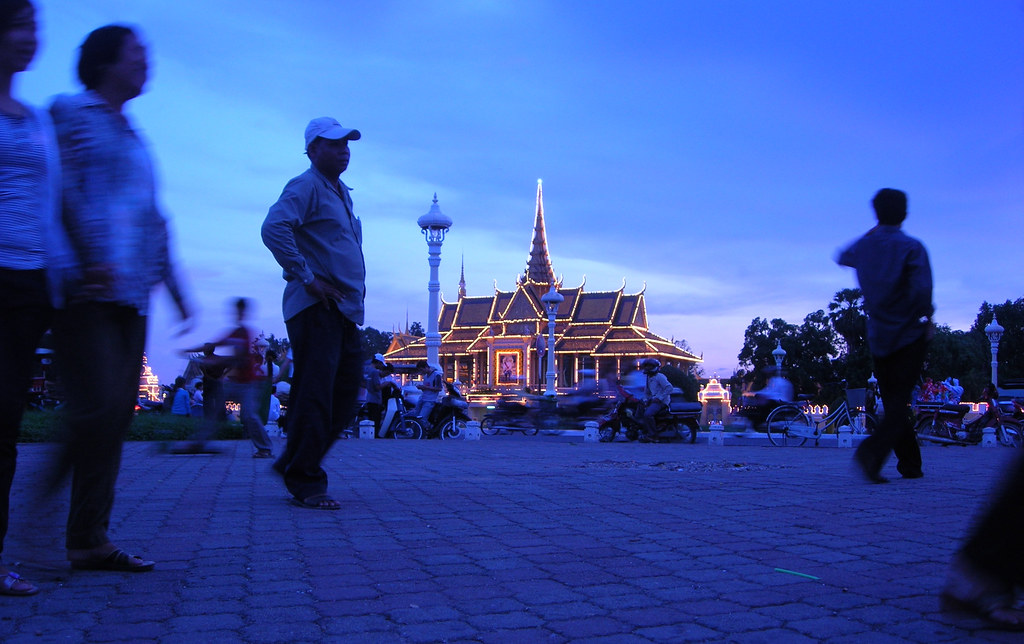
Hi from Phnom Penh


I feel like I should blog right after Adam because I have as different an internship as I can imagine being funded by the same organization. I'm working jointly for the Face to Face AIDs Project and Salvation Centre Cambodia, out of Phnom Penh, on a project about the obstacles faced by disadvantaged children in the Cambodian educational system. Both organizations have come to be involved with vulnerable children and educational issues here as an outgrowth of their work with the Cambodian AIDs crisis.

It's taken me about a week to meet everyone and make a schedule. I'll be working at the SCC's Boeng Kok school Mondays through Wednesdays, where I will help teach and also interview the children and teachers.

On Fridays, I'll head south to Takeo province to help out at the orphanage at Wat Opot. Originally more of a hospice for AIDs patients, Wat Opot has become a children's community for children orphaned by AIDs and HIV-positive children. I hope to stay out there some weekends, although I'm not entirely certain of my stamina for life without air conditioning in the Cambodian rainy season -- even for someone like me, who hates air conditioning, this is rough going. So far, it seems I'll be getting their sewing machines working and showing them macrame (of course I can make macrame pot-hangers! I'm a law student.) and also interviewing the kids.

SCC is helping set me up with interviews with teachers in the public school system as well, and I hope to spend Thursdays doing research outside of the two schools I'll work at.

I don't have much in the way of pictures yet -- I want to get to know people before taking their portraits. This boy, however, came running up to us when we were traveling back from Takeo on Friday and said, "Take a picture!" I showed him himself on the digital screen and he grinned and ran away.

Also, I hope to figure out how to post a short movie about trying to cross a Cambodian street.